Developing My Creative Practice – Postscript
The Journey from Idea to Artefact

In 2018, I was awarded a Developing Your Creative Practice (DYCP) grant from Arts Council England, designed to support artists across all art forms at a pivotal moment in their careers. I wrote a series of five articles about the experience, which I have been reflecting on recently. It’s seven years since their first publication. This piece, written in 2026, is the postscript.
At the start of my DYCP project, I already had a first draft of 36 Hours, a creative non-fiction work of life writing. What I needed was time to hone it, to shape it into something others might want to read, to figure out how to get it out into the world and what it might mean for my future creative life. Although not all came to fruition during the project, the connections were made, conversations had, and ideas shaped that have led me to where I am now. And it’s a very different place from where I began.
Post DYCP Book Journey (the unfiltered version)
36 Hours was published in November 2022, three years after the DYCP project ended. It was an interesting journey, full of twists and turns and bumps in the road. In the best tradition of saving you from reinventing the wheel, this is how I did it and what I learned along the way.
Editing the manuscript (at least twice):
I read and reread each chapter, weighing and tweaking the language until it held my attention as I hoped it would another reader. In the process, I noticed a gradual distancing from the text, which was something unexpected. It felt like a necessary letting go, a transformation from the status of ‘my book’ to an artefact I was the custodian of.
Getting feedback from many readers:
I asked many people to read and comment on the manuscript. Anyone who was willing. People I ran into at the local Co-op, who wondered what I was up to, got a copy (sorry, not sorry!). This included family, friends, acquaintances, members of a writing group, artists working in other forms, colleagues, former tutors, notable memoirists, especially those dealing with grief or health themes, and professionals working in palliative care.
I wanted two things: honest, constructive feedback to improve the work, and confidence-boosting encouragement.
Although I write and put words into the world, and can appear confident, inside I am an introverted, shy, reticent person; I don’t like to make a fuss. I’m the least likely person to high-five my wins or say, ‘go me!’ I was taught young not to blow my own trumpet; one’s successes were something to be rather ashamed of. Later, I had a professional life on the business end of other people’s creativity, and although happily backstage, it left me insecure about my own creative voice.
So, I needed other humans to read my book and celebrate it as a well-written text. I needed to hear that it was okay for me to claim this version of myself.
The DYCP project was a game-changer in this regard because the funding body I’d approached numerous times, scoring grants for clients’ projects, had permitted me into the same club. This validation, in part, gave me the confidence to approach people for help and to share the manuscript.
Without hesitation, readers were generous with their time and encouragement. I listened to the feedback, as though we were discussing an external project that we all intended to improve.
Making Publishing Choices and Decisions:
Mainstream publishing is still fairly traditional. So, most MAs in creative writing include sessions on acquiring an agent and getting signed to a publisher, and that had been my intention during the DYCP – to ready myself, to make connections, to gather the right team around me. Afterall, how else do you get your book into the world?
There were a few snags.
One: a powerful sense of protectiveness about my book. It’s a memoir about a deeply personal subject. What on earth would happen if I got signed? I wondered. I imagined the publicity rounds, the bookshop banners, selling the work with Hey, come and buy my amazing new book about my dying husband! It felt unseemly. I realise it’s a massive contradiction. I wanted the work to be out in the world, but I was uncomfortable with it being the centre of attention. It needed something gentler.
Two: the timescale. My first husband, the subject of the book, died in 2009. I had lived with PTSD for a decade when the DYCP project concluded. At the end of 2019, one publisher said to me, The book’s great, but we already have our grief memoir for 2025. This says a lot about the publishing cycle. I knew it would be a long haul, too long.
Three: the editorial process and creative control. One agent wanted me to flesh out the details of my late husband’s life; another wanted a backstory for my stepchildren. But the book deliberately focused on a specific thirty-six-hour period, aside from one or two historic moments deeply relevant to that span. It was an artistic choice. I could foresee other things being challenged, for example, my decision to write in a first-person present voice. Well-intentioned suggestions, but I just couldn’t do it. My doggedness surprised me. I discovered that I wasn’t prepared to alter the book’s shape to fit a genre or a marketing plan. The sense of custodianship ran deep.
Abandoning the traditional route for something hybrid:
My arts career had included a few years in the music industry, where DIY is celebrated. Releasing an album on your own label is smart. It means creative control and financial reward, especially if your work is niche. DIY book publishing, on the other hand, still carries a somewhat negative connotation, associated with poor-quality vanity projects. The assumption is that if the book was good enough, a ‘proper publisher’ would have taken it on.
But consider, for a moment, that in traditional publishing, authors might earn 5%-8% of the retail price in royalties on a paperback. And that, unless you’re likely to be a big-ticket best seller, the marketing budget will be small, and you’ll be expected to do a lot of it yourself. There’s no guarantee retailers will stock your title, especially if it’s leftfield. And there’s the question, as above, about artistic control and editorial process, and the choice of book cover, and… and…
So, for 36 Hours, I decided to take a leaf out of my musician friends’ book and go DIY. I’m not saying it’s the best route for every author or project. But it was the right choice for me at that time, with that book.
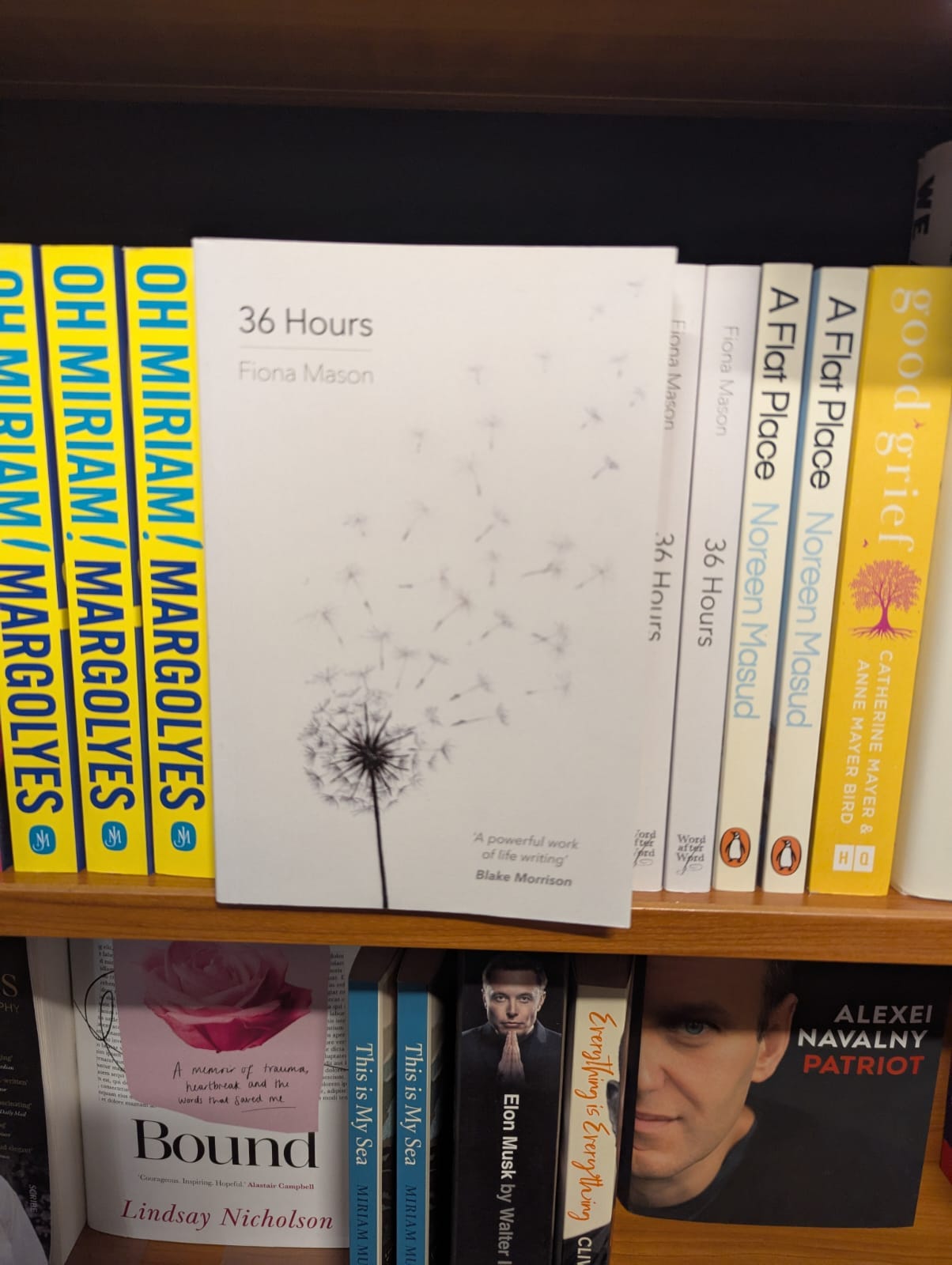
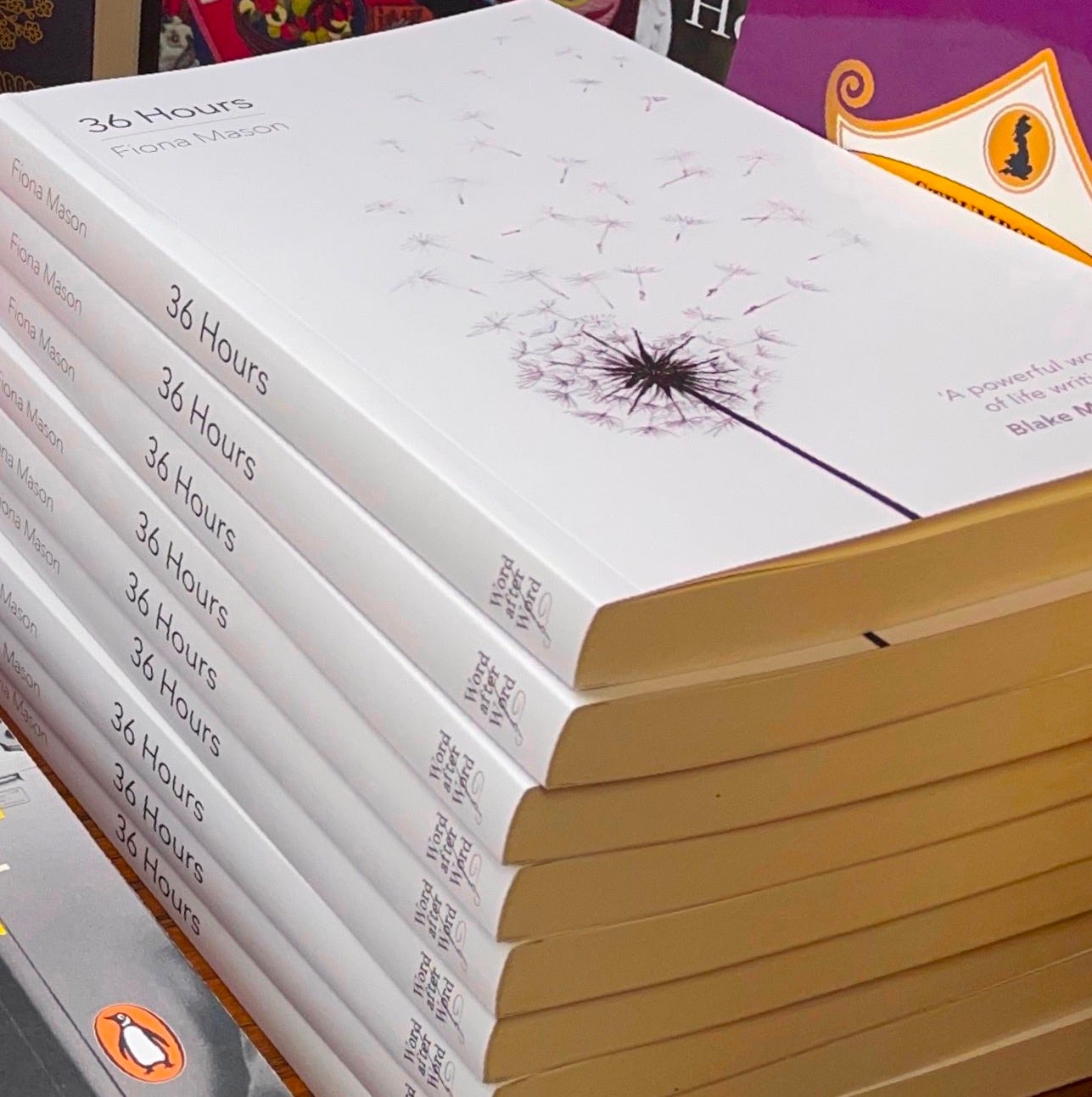
I commissioned a respected editor, and we worked together on the final finessing whilst honouring the artistic choices. For the cover, I sketched a dandelion clock with thirty-six seeds floating away. Simple, sparse, quiet and spacious. The authors, academics, and medics who’d read the manuscript, generously offered testimonies I could include in the book and use in publicity. I secured printing and distribution deals, ensuring national and international reach.
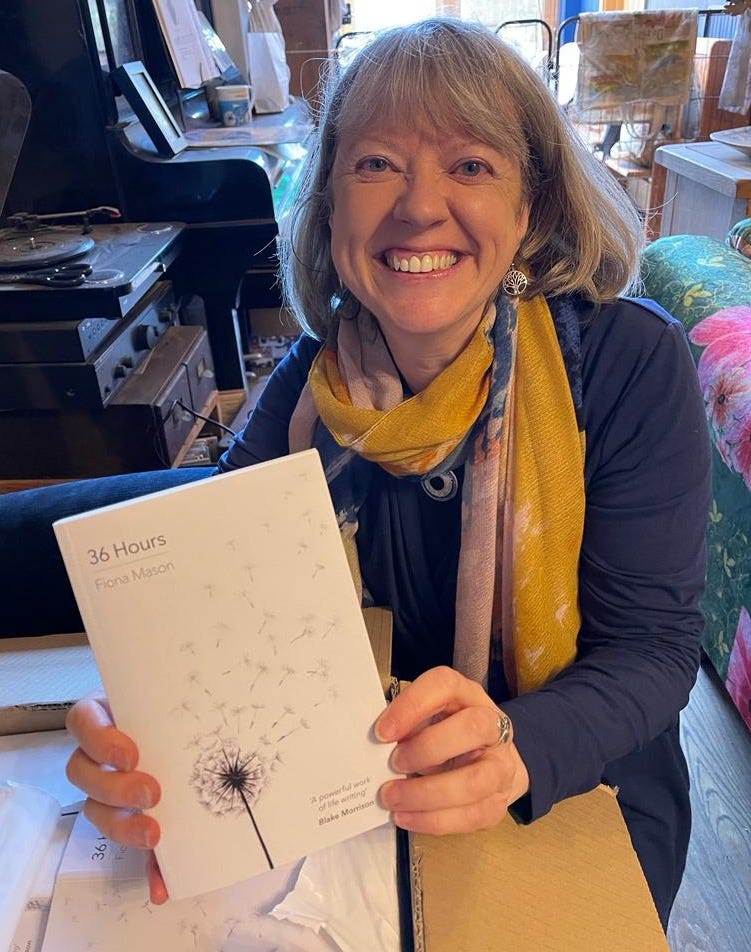
Then, in November 2022, I released 36 Hours through Word After Word, a company I’d co-founded a few years earlier to offer creative writing courses, mentoring, editing, and publishing. Ah, the unboxing moment. Unforgettable, because of what it had taken to get there, as a human, as a writer.
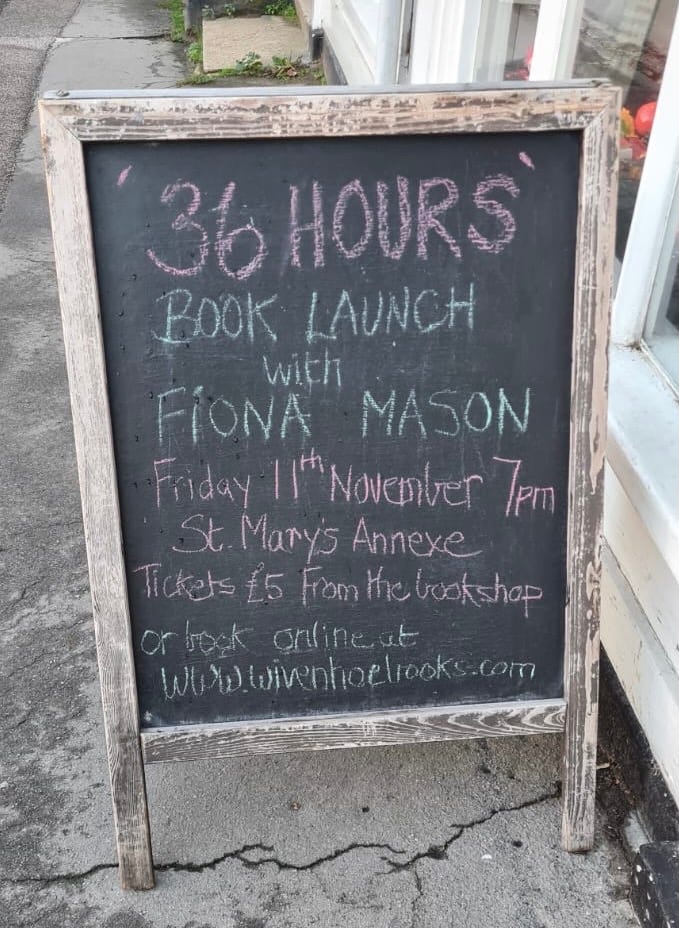
The book launch was hosted by my local independent bookshop and held in the annexe of the ancient parish church. It was full of familiar faces from the small town I’d called home for thirty-odd years. This felt safe, held, appropriate, and reverent, honouring the account of my experience and the memory of my deceased husband in the most careful way. It was the best decision and outcome for my first book.
Future Creative Life
The journey from manuscript to publication would have been plenty to occupy the three years it took. But life rarely goes in a straight line.
The same period also included (but was not limited to) a new job, the COVID-19 pandemic, two house moves, a seriously ill dad and a cancer diagnosis.
The year after the paperback edition, I released the book on Kindle. I was invited to take part in two festivals: the City of Literature Festival, with the National Centre for Writing as part of Norfolk and Norwich Festival (with whom I also recorded a podcast), and in the autumn, the Birmingham Literature Festival. 36 Hours was shortlisted for the East Anglian Book Awards.
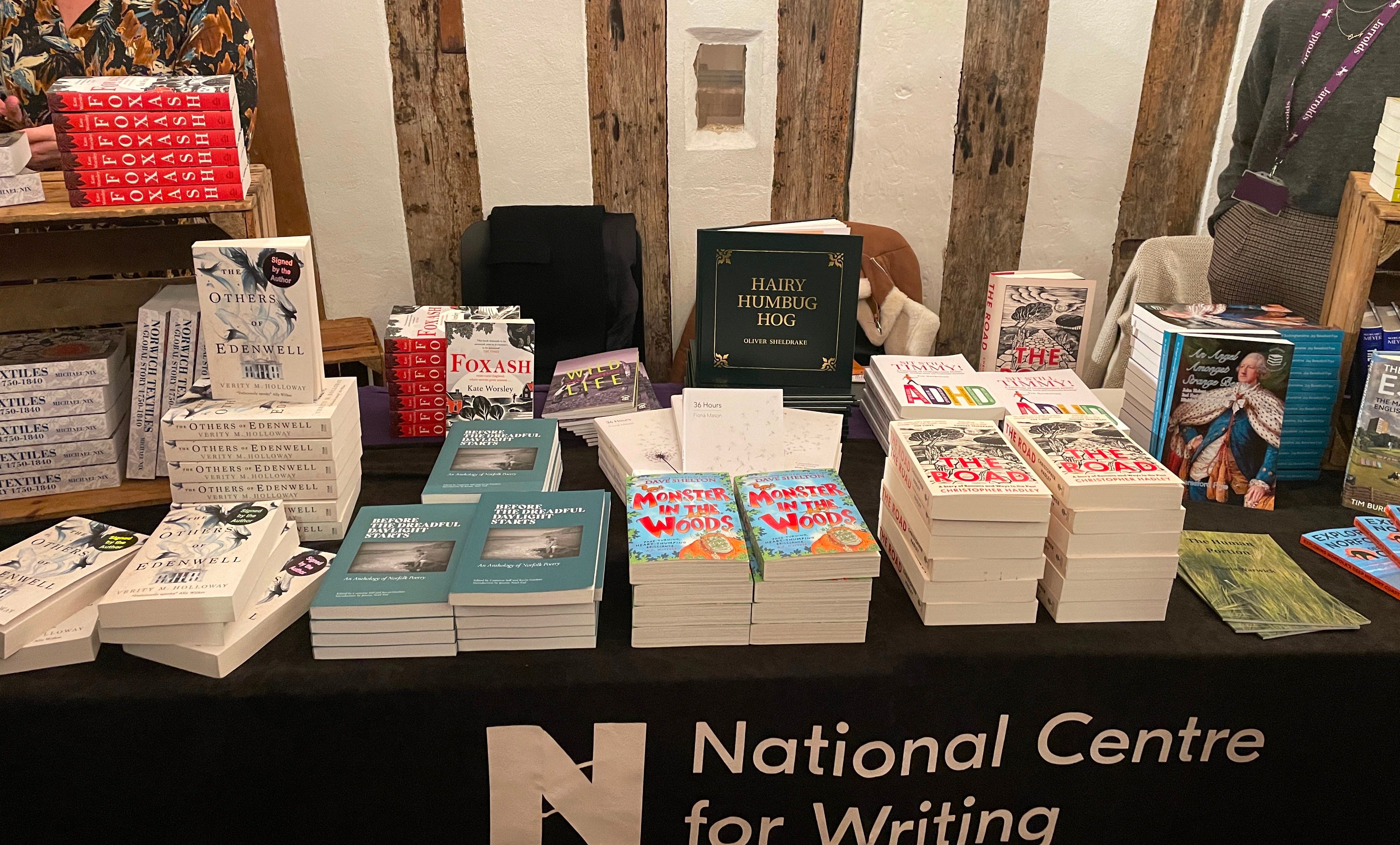
I wish I could report that I’ve pursued further opportunities since then, with more festival appearances and work on my next book. But life rarely goes in a straight line.
The two years since publication have included (but are not limited to): deaths of my father and brother, deathmin and house clearances, another cancer diagnosis, becoming a grandma, getting married and turning sixty.
The lows and highs of life lived, within which creative life unfolds.
Re-reading my DYCP application, I’m struck by how tentative yet urgent the language is. I remember well the sense that it was surely my time. That I’d waited long enough. That all the other kids had been playing on the merry-go-round, and I wanted a go. And how I’d tried to put this feeling into an adult, serious register that I knew, as an arts fundraiser, would hit the right notes.
What I’m most struck by is how contained my thinking was then. I made a false distinction between different aspects of my life: Fi the arts professional, juggling with Fi the carer, desperately wanting to be Fi the creative. What was beginning to emerge, unseen, was foregrounded in the very act of applying for the DYCP, even if I couldn’t yet articulate it: to start fully living my creative life, I had to stop seeing it as something separate from the self that had hitherto occupied the world.
Being Ready
Being ready to make a grant application doesn’t mean having all the answers. I didn’t have the answers when I applied, but I was ready to ask the right questions. The answers began to take shape during the project and have continued to emerge since then: not held within a container called ‘creative life’ but distributed across the wider field of life, lived in all its glorious, terrible, messy humanness.
The DYCP fund reopens this year, with guidelines due to be published in April and applications opening from June. There’s no harm and every benefit to throwing your hat in the ring. If you’re not sure you’re ready, journal your ideas and talk with friends and other artists you trust until you understand what you need and what you want and can articulate it clearly. It’s hard to tell a compelling story about something that lacks shape or substance.
Whether you apply or not, I urge you to honour your creativity as a true facet of being human. Especially now, when so much human creativity is being delegated to AI platforms that provide quick wins (write me 500 words on this, make me a picture of that). Your creativity is your birthright, and a wholly legitimate use of your time, energy, and focus. Whether you bag a grant or not, develop your creative practice, own it, and let it run through every aspect of life. In the end, that’s what really matters.
Here’s a link to Arts Council England: Arts Council England Developing Your Creative Practice Round 24